Project Resources

Kits, publications, videos, and core documents to build awareness of the work to advance early childhood education as a profession—and why it matters.

Explainers, Toolkits, and Flyers

Click The Image or Button To View And Download

False Vs. Fact: What the ECE Profession Bill Really Means for Educators

This flyer addresses some of the misinformation circulating on social media and email about S.119. It's critical that stakeholders impacted by - and impacting - the ECE Profession Bill have accurate information.

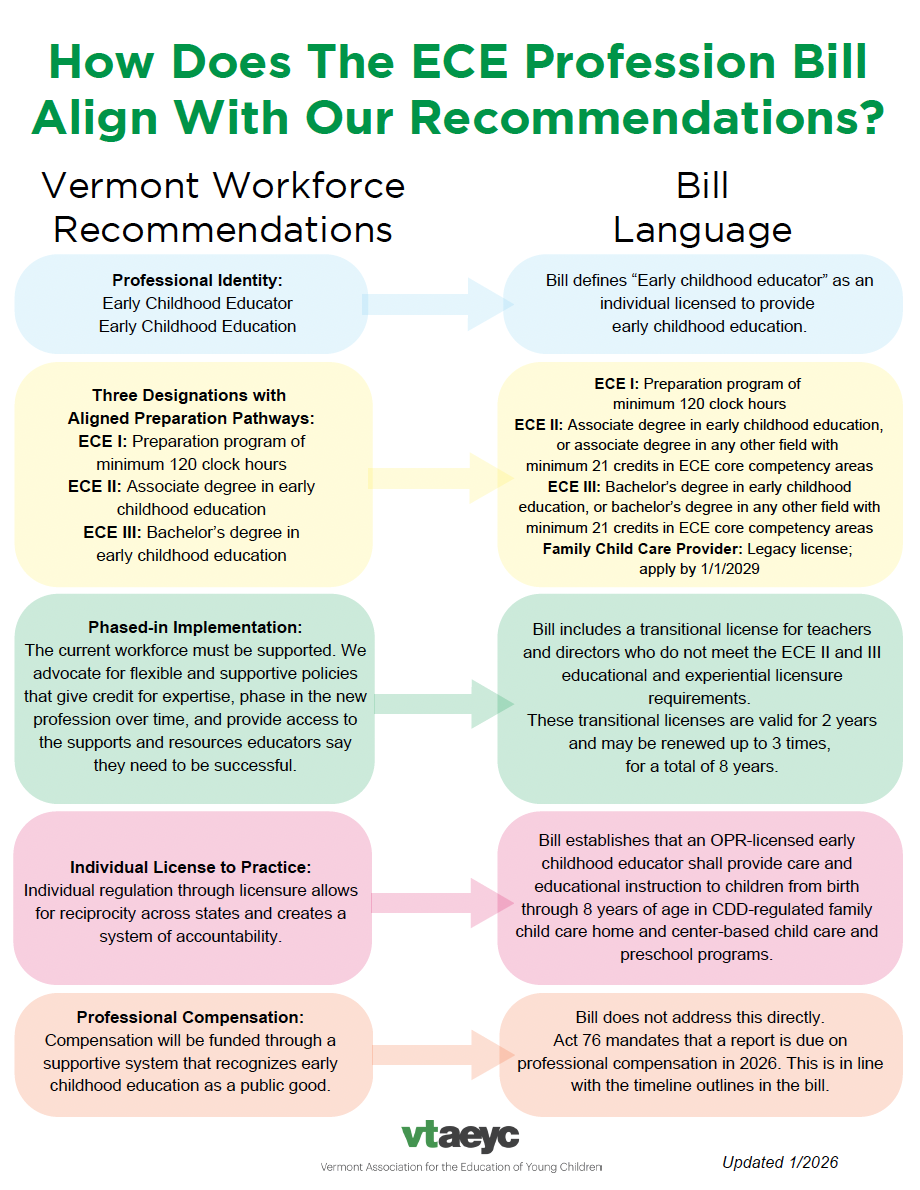
Crosswalk: Bill S.119/H.182 Aligns with Workforce

This crosswalk shows how the recommendations of Vermont's workforce align with the language in the Senate and House bills proposing licensure for early childhood educators.

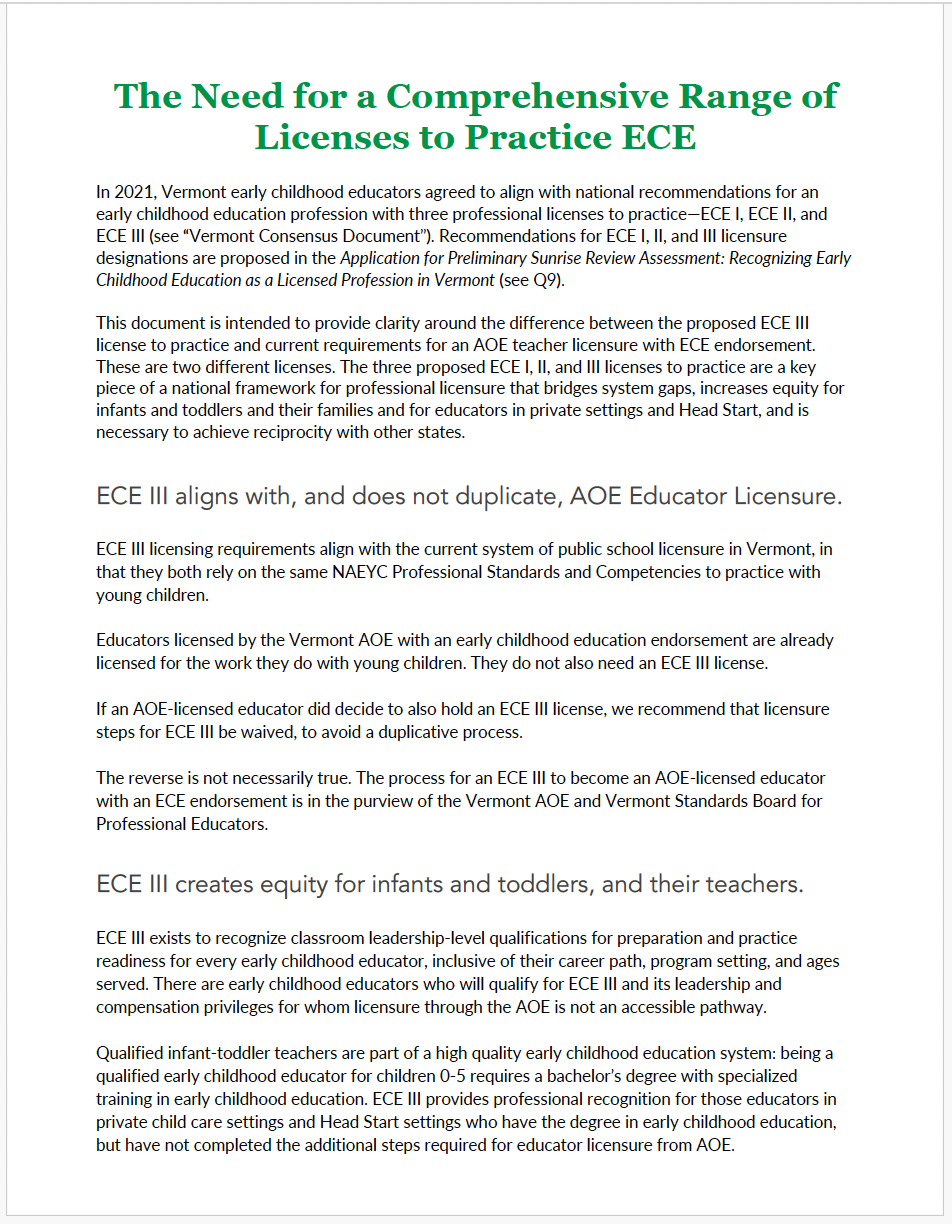
Range of Licenses to Practice Explainer

Why the ECE profession needs to include ECE I, ECE II, and ECE III—the nationally recommended range of licenses—and how this aligns with current systems of educator licensure.

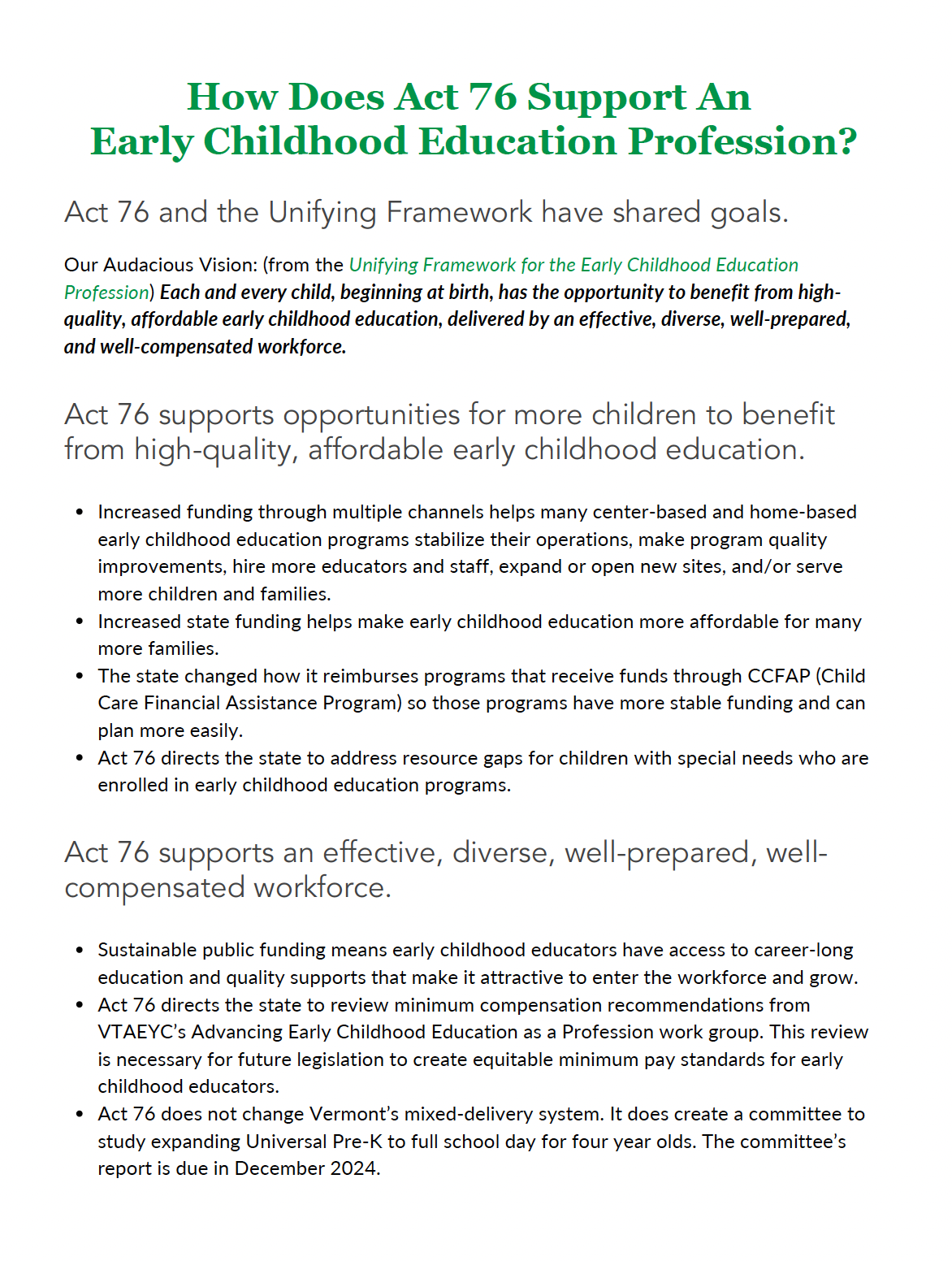
Act 76 Explainer

How Act 76 supports an early childhood education profession - and what the 2023 law does and does not do.
Implementation Recommendation: Honor Career Ladder Level Certificates

Recommendation: For a limited time during the transition to the profession, honor Northern Lights Career Ladder Level Certificates as equivalent to the preparation programs that will be required in the future.

Implementation Recommendation: ECE I Preparation Pathway

Recommendation: Create an ECE I preparation pathway with three existing credit-bearing courses at CCV and 80 hours of field experience.

Professional Identity Toolkit: Who We Are and What We Do

Samples, resources, and a thought board to support implementing a professional identity as early childhood educators.

Social Media Toolkit: Using Your Digital Voice

A toolkit to support early childhood educators as digital advocates on social media. Developed by Let’s Grow Kids in partnership with VTAEYC.

Flyers

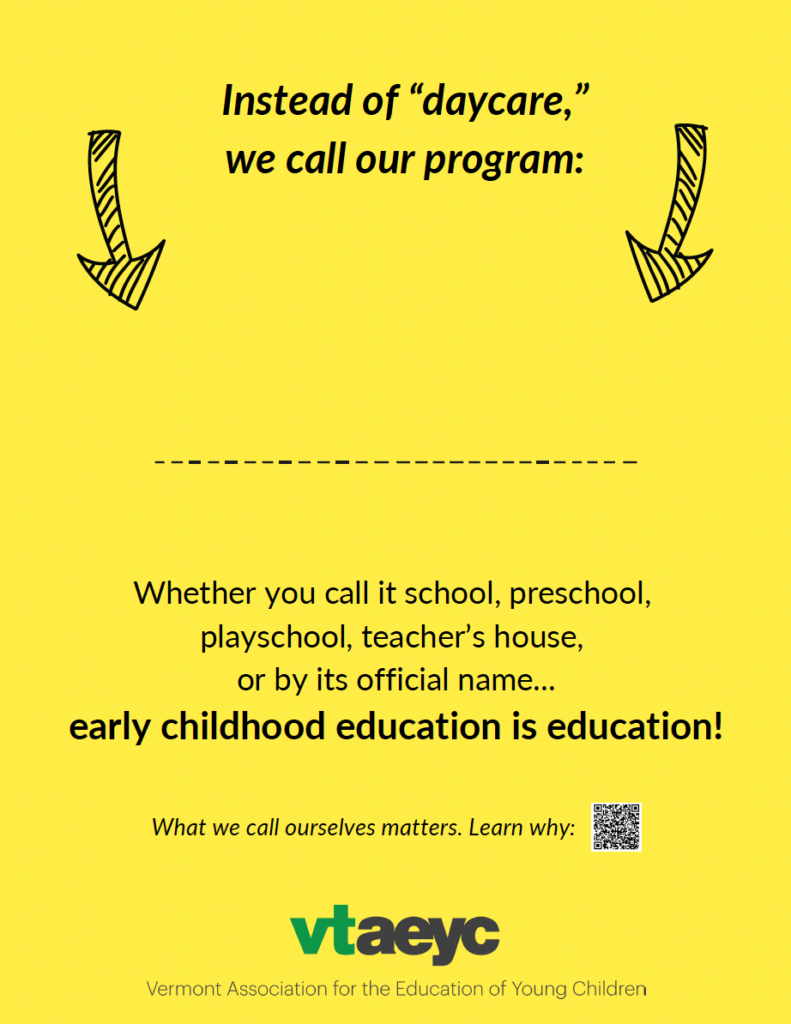
ECE Profession flyers available to download.

Charts and Graphics

Click The Image or Button To View And Download

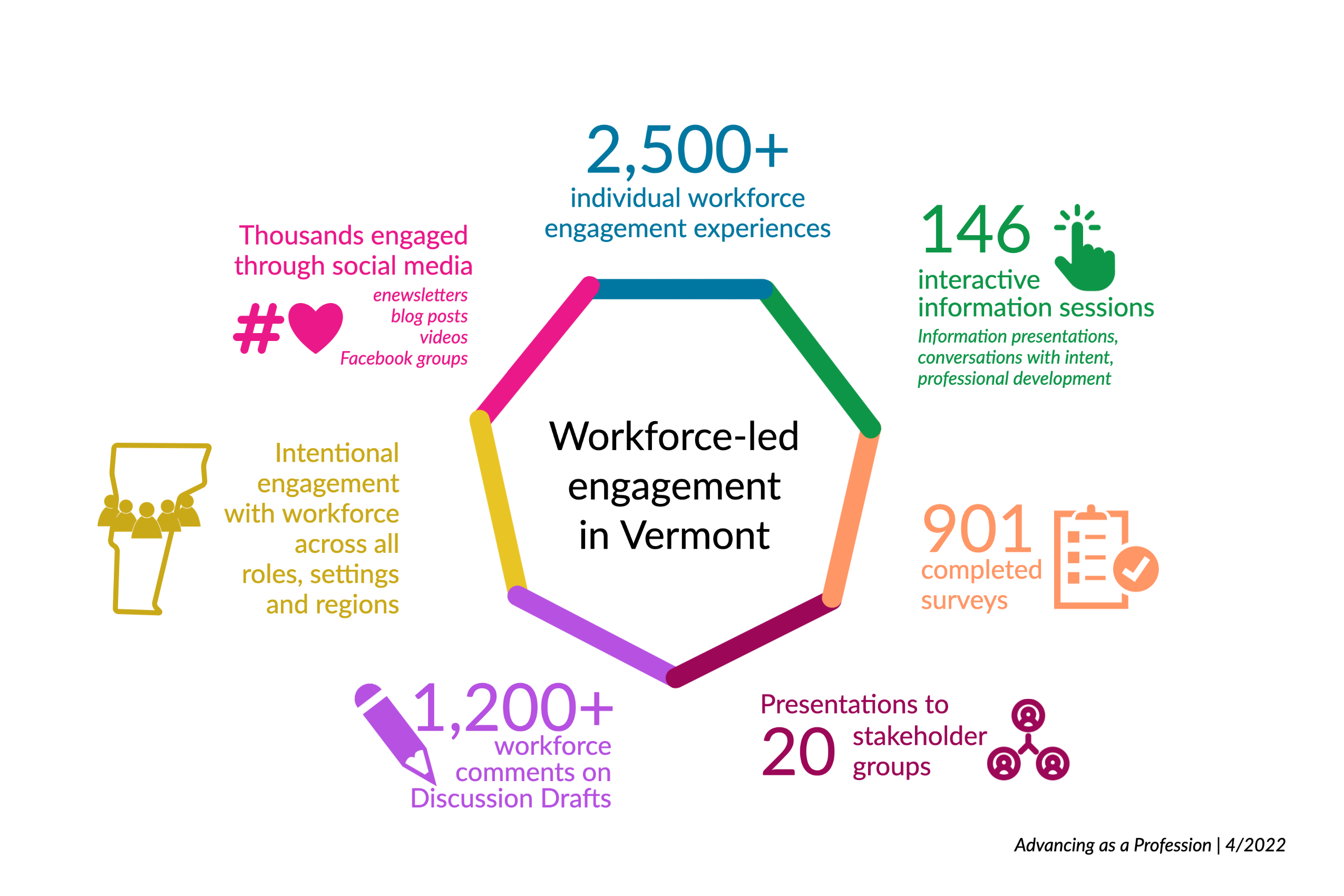
Workforce-led Engagement Graphic

Updated April 2022

This graphic shows this project’s quantitative engagement with Vermont’s early childhood education workforce and stakeholders.

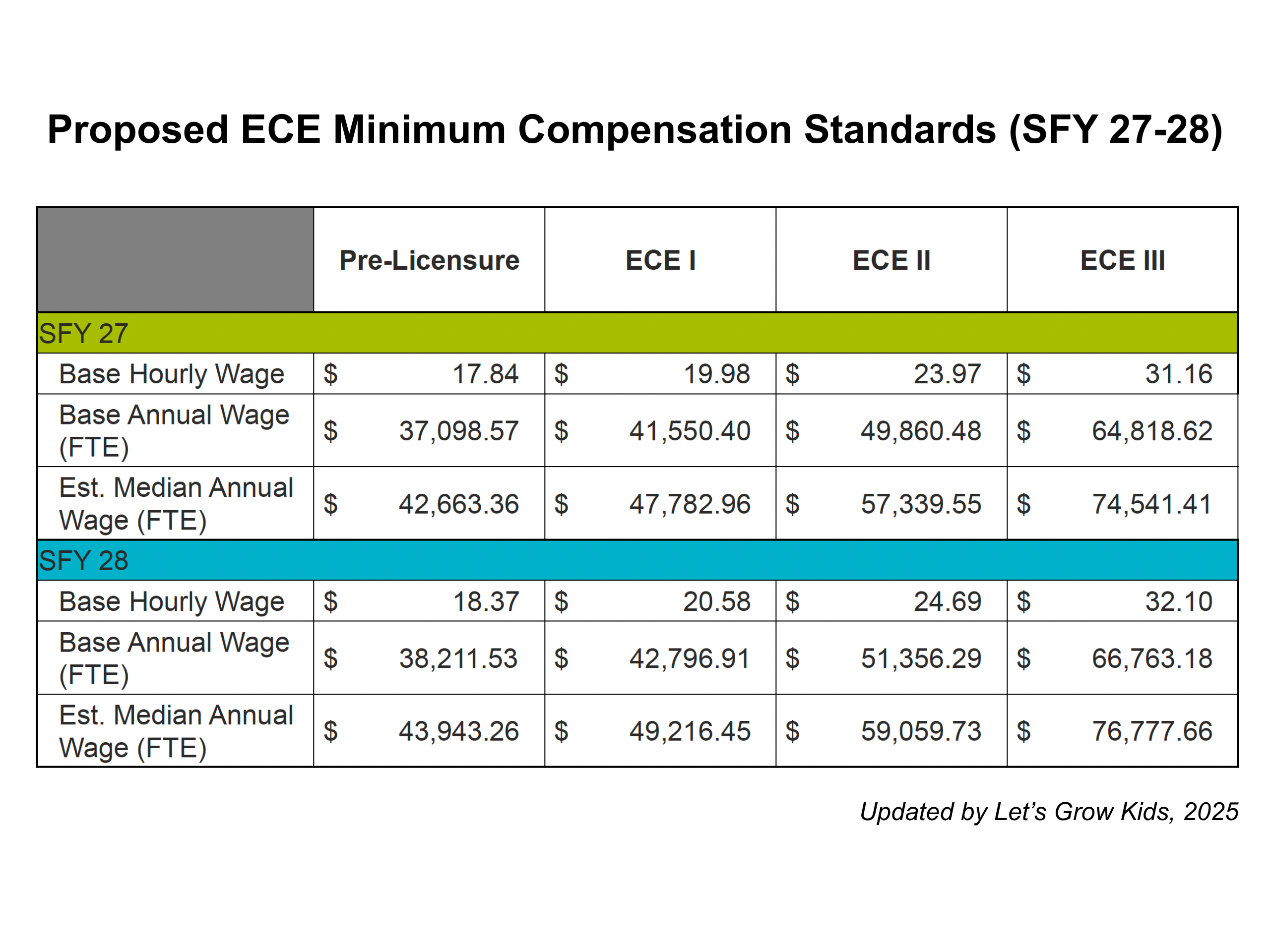
Proposed Minimum Compensation Scale

From design team work completed in 2022; to be updated

This chart featuring our design team’s compensation research and recommendations was shared in the 2022 professional development session “Advancing Early Childhood Education as a Profession: What’s the Latest?” 

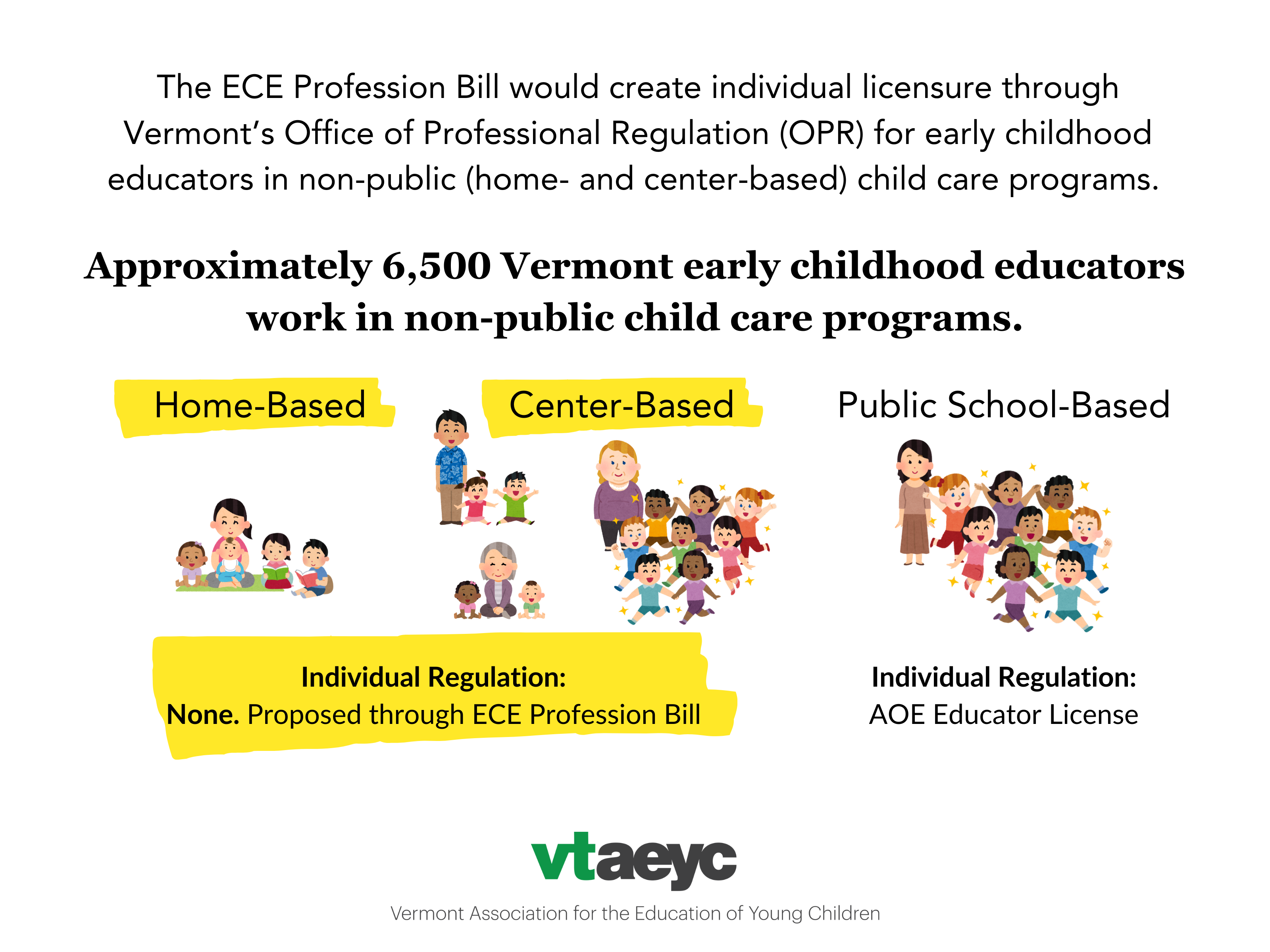
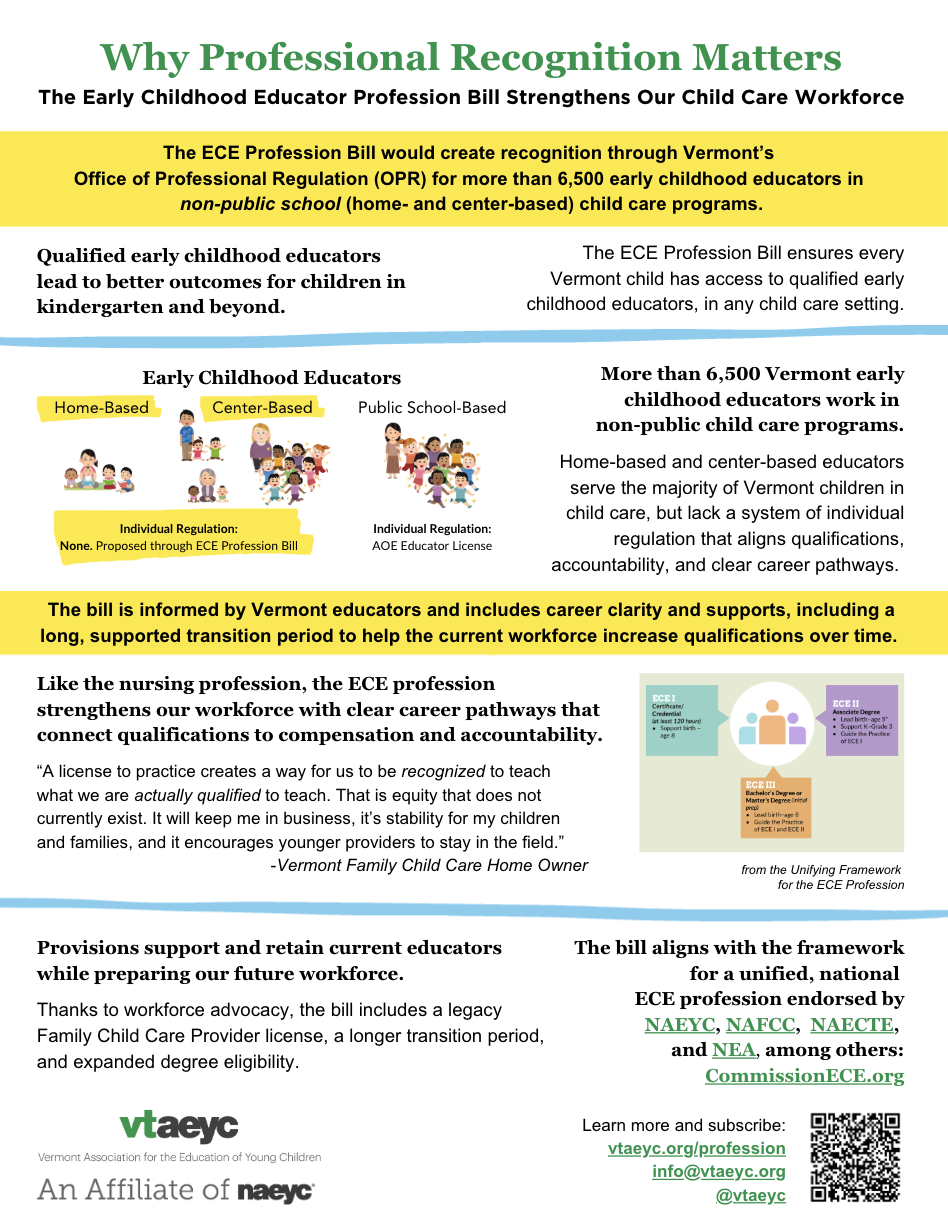
ECE Setting and Regulation Map

April 2025

Per S.119, the ECE Profession Bill, the Office of Professional Regulation (OPR) would license early childhood educators working in state-regulated,  non-public settings: family child care home programs and center-based child care programs. Educators who hold AOE teacher licensure with ECE endorsement would be exempt from OPR regulation.

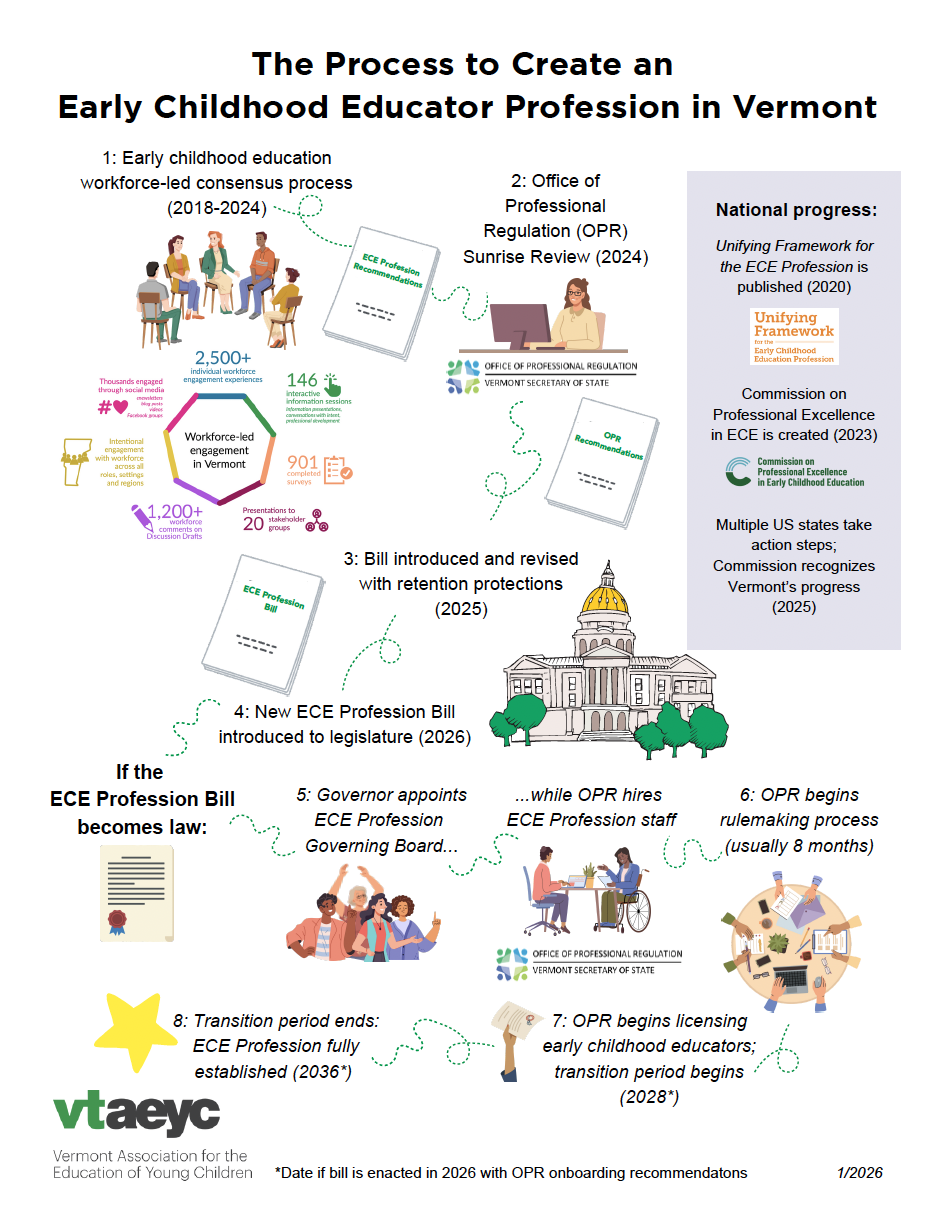
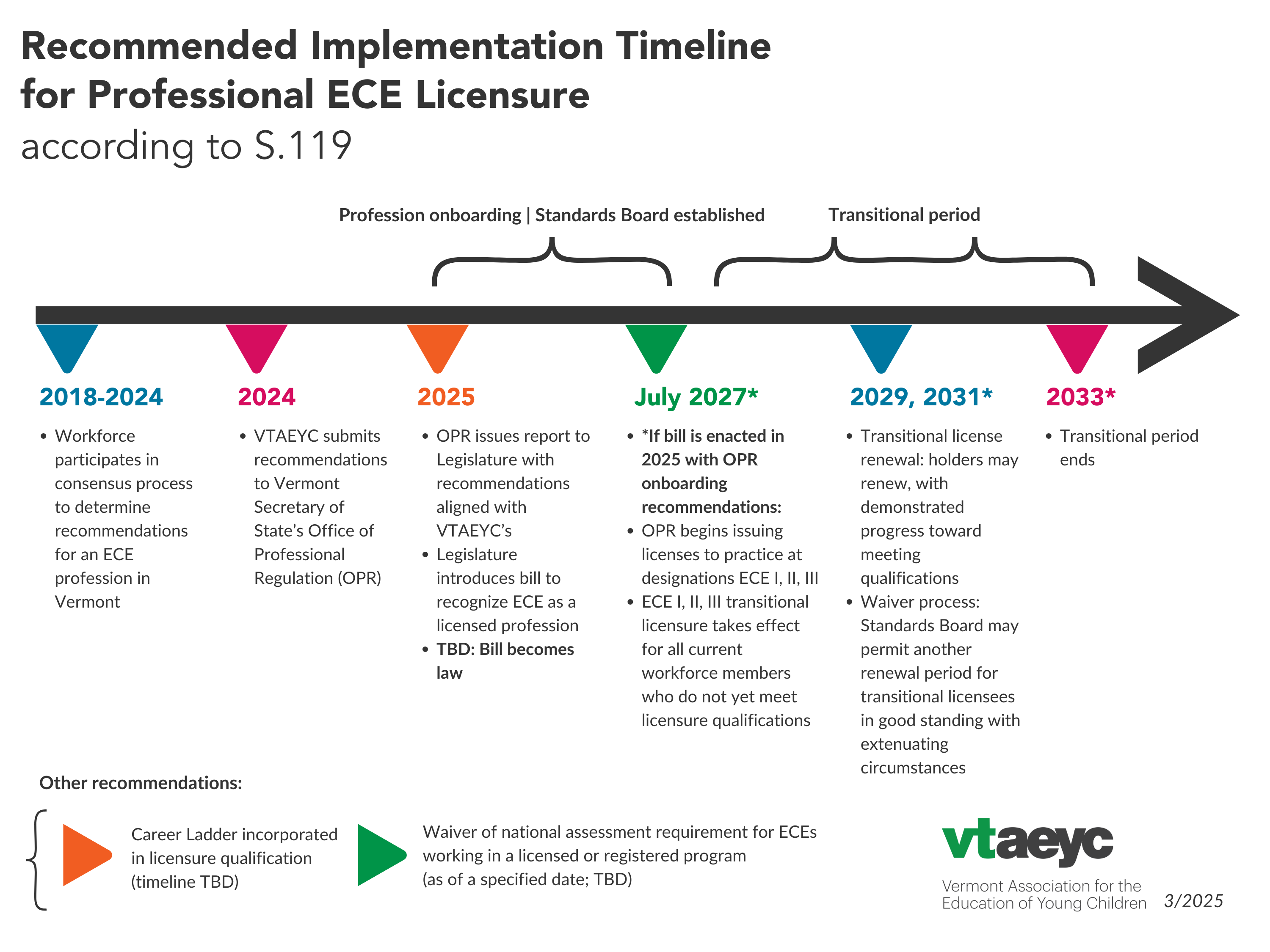
ECE Profession Bill Recommended Timeline

Updated March 2025

This graphic shows the timeline recommended by S.119 for phasing in the profession.

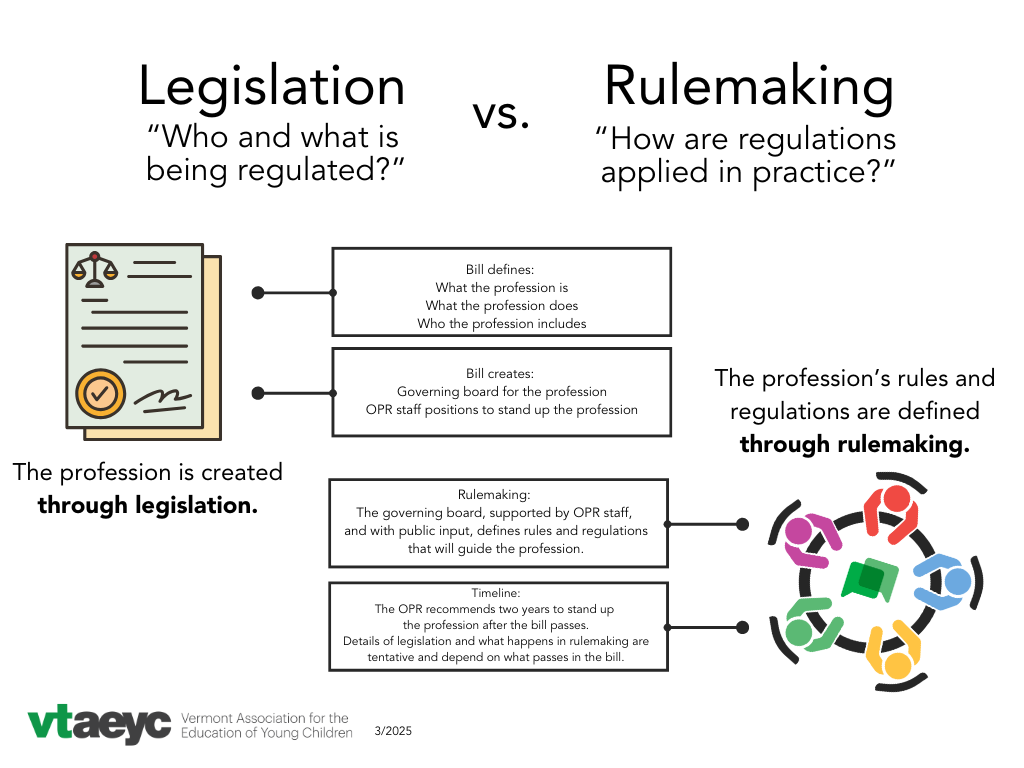
Infographic showing the difference between legislation - who and what is being regulated - and rulemaking - how regulations are applied in practice.

Legislation Vs. Rulemaking

March 2025

Legislation defines what the profession is, what the profession does, and who the profession includes. Rulemaking follows legislation. This is the process by which the profession governing board and OPR staff define the rules and regulations that will guide the profession. The rulemaking process includes public input.

Social Media Assets

Our ECE Profession Posts and Videos You May Download And Share
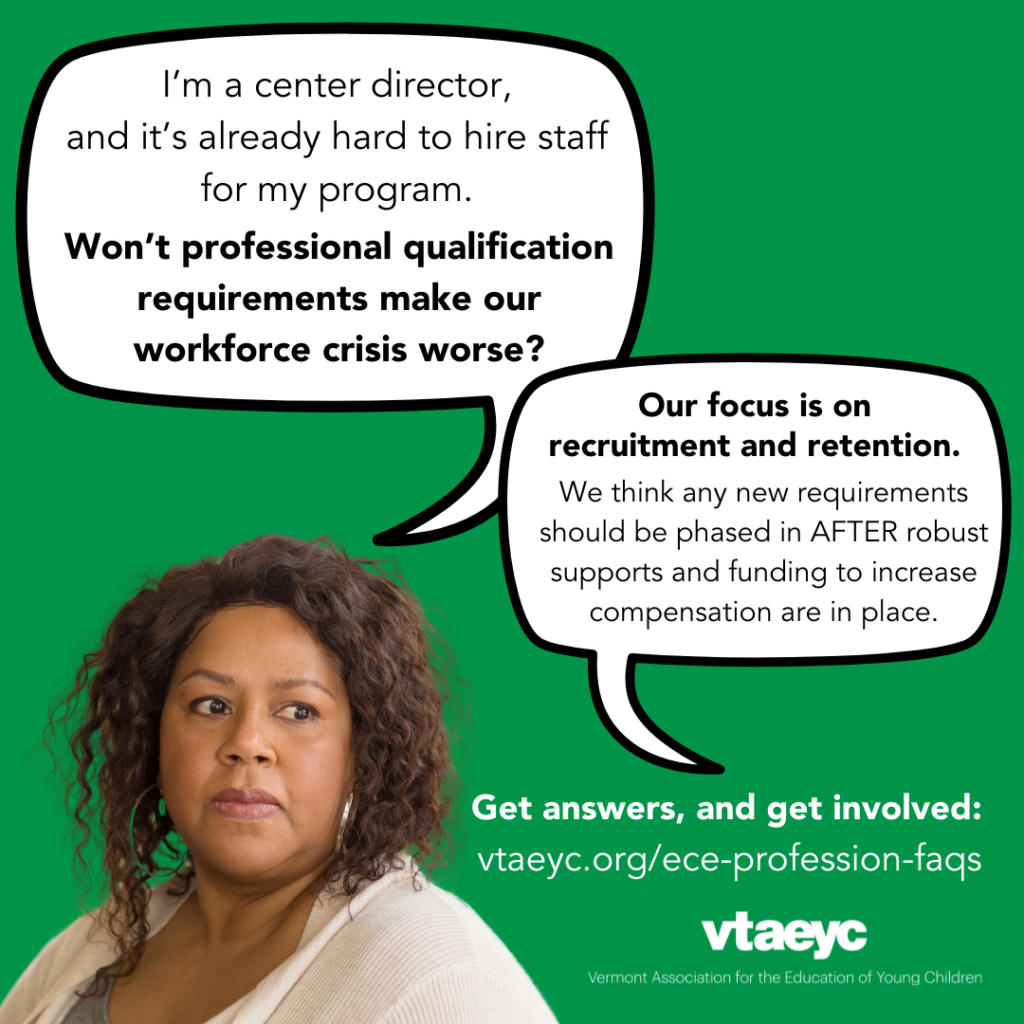
ECE Profession FAQs

Social tiles and reels with our most frequently asked questions about how the ECE Profession will work—and answers from our recommendations.

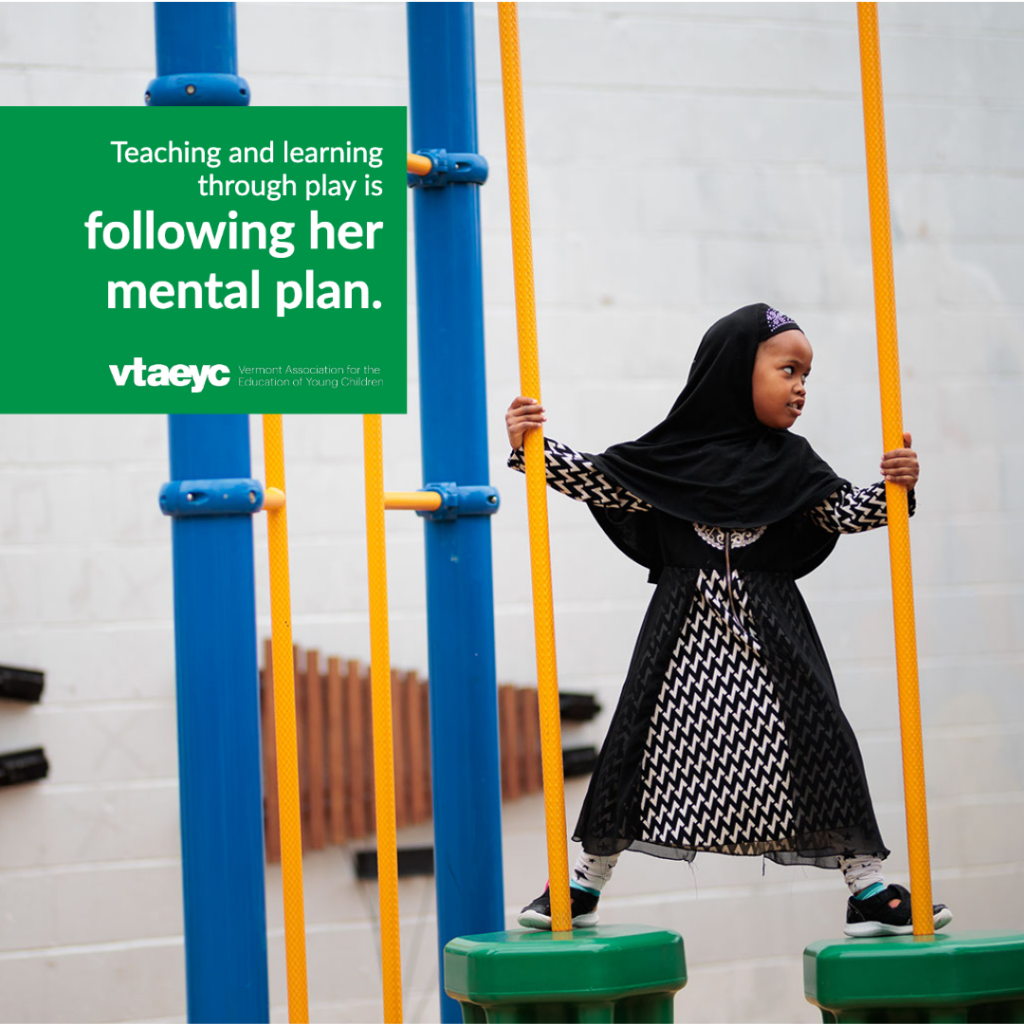
Teaching And Learning Through Play

Tiles showing how early childhood educators use play to help children learn about themselves and their world.

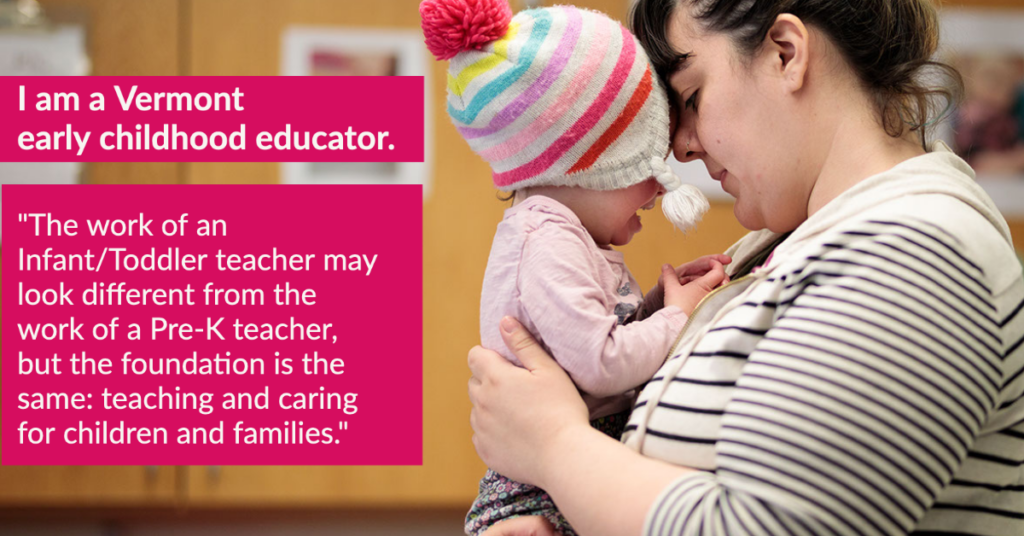
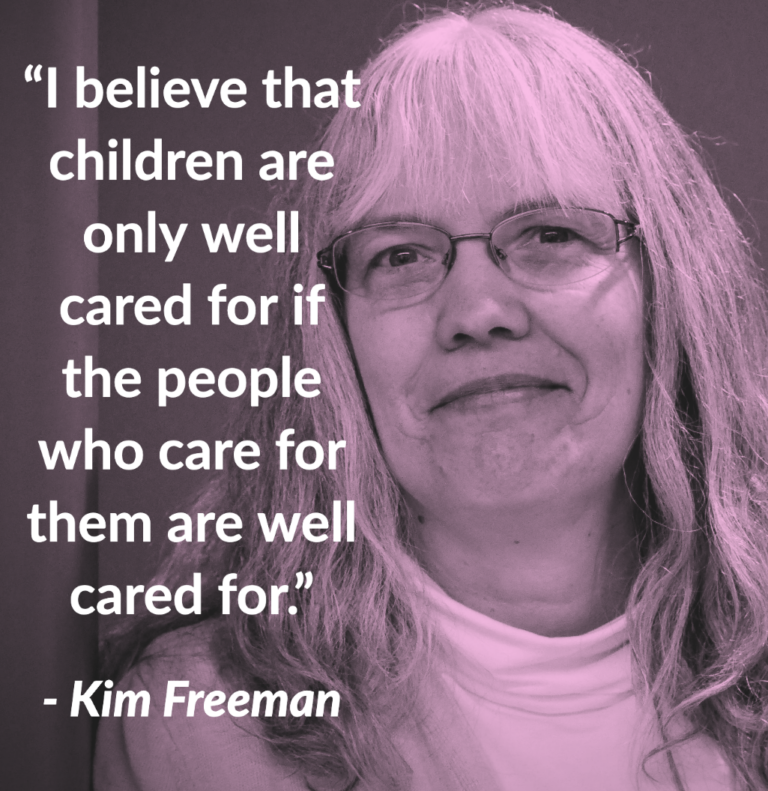
"I Am An ECE"

Photos of Vermont early childhood educators at work, with quotes from Vermont workforce members about what it means to be an early childhood educator.

Popular Tiles and Reels

The ECE Profession initiative’s most affirming, most liked, and most shared social media tiles and reels.

Sharing ECE Profession Resources?

All posts and videos on this page and on our socials are available to share. We love it when you tag us! @VTAEYC

Consensus Documents

The Task Force's Publications on How Vermont Aligns With the Recommendations in The Unifying Framework

Quick access to all workforce consensus here. Scroll down for more detail about each section.

Professional Identity:
Full | Brief

Three Designations with Aligned Preparation Pathways:
Full | Brief | Video

Professional Compensation:
Full | Video

Professional Licensure:
Full | Brief | Video

We Are Early Childhood Educators

Our profession is early childhood education. This is a distinct profession within the larger field of early childhood.

When you walk into any hospital or public school in the nation, you can tell by looking at someone’s ID lanyard what their role is and what they are qualified to do.

Early childhood education is specialized work. A cohesive professional identity across states and settings helps our communities understand our qualifications for doing this work, and the importance of providing high quality experiences for young children. 

Learn more about the roles, responsibilities, and boundaries of the early childhood education profession in our Professional Identity Consensus Document.

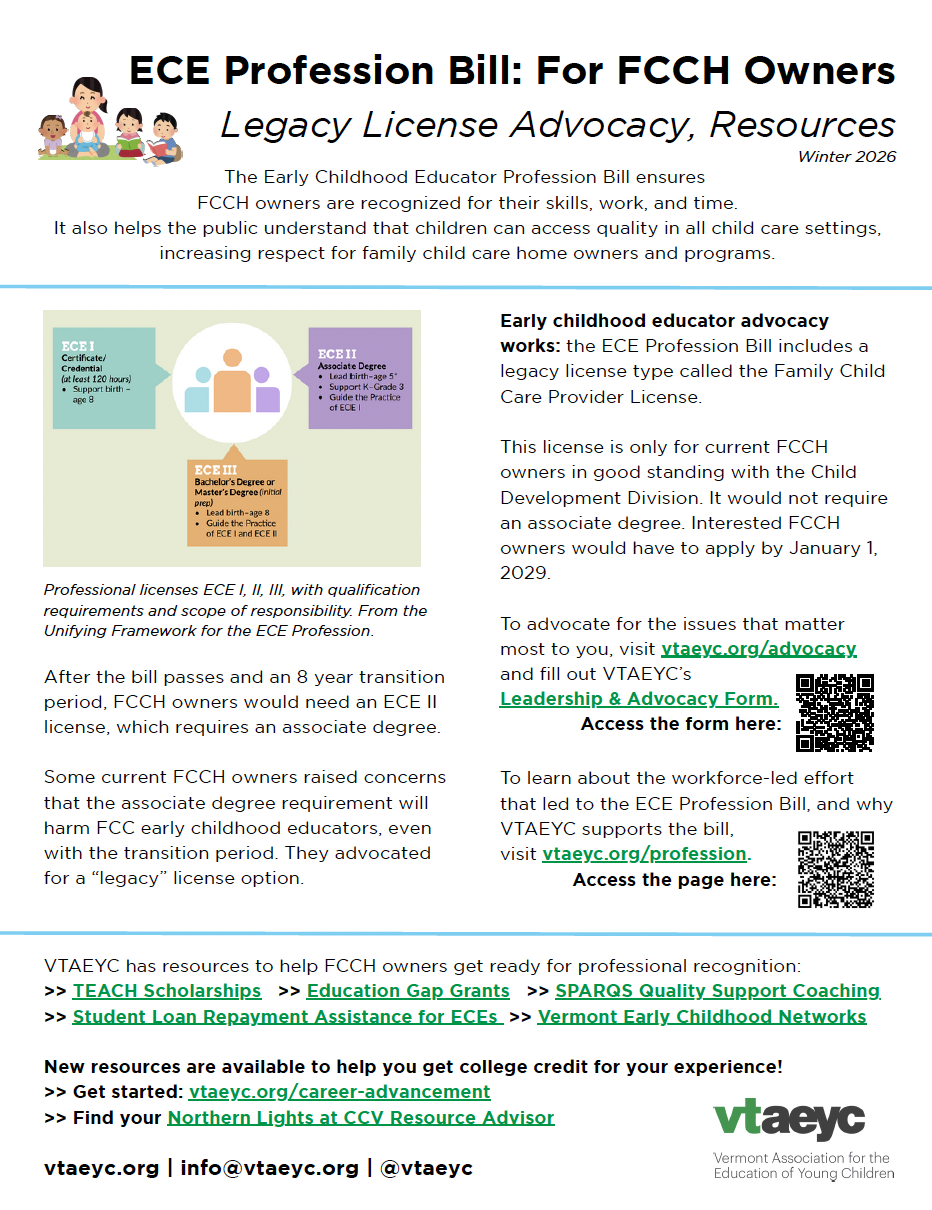
We Practice as ECE I, ECE II, or ECE III

Early childhood educators will practice at one of three clear professional designations that represent their specific qualifications to support, lead, and guide.

We recommend preparation qualifications for each designation that are aligned and stackable:

  • ECE I: Preparation program of minimum 120 clock hours
  • ECE II: Associate degree in early childhood education
  • ECE III: Bachelor’s degree in early childhood education

As an early childhood educator’s preparation and competency increase, their responsibilities and compensation also increase. 

Learn more in our Three Designations with Aligned Preparation Pathways Consensus Document and video, and our explainer.

We Are Individually Licensed to Practice

Individual regulation through licensure allows for reciprocity across states and creates a system of accountability.

A license to practice shows hiring programs, families, and the public that a professional is ready and able to do their job. A license shows that a professional:

  • Has specialized knowledge and skills
  • Shows professional judgment and ethics
  • Holds a position of trust

This simplifies hiring, disciplinary processes, and reciprocity when educators move from state to state. Showing we are willing to be held accountable for our practice strengthens our case for public investment in early childhood education as a public good.

Learn more in our Professional Licensure Consensus Document and video, and explainer.

We Receive Professional Compensation

Compensation will be funded through a supportive system that recognizes early childhood education as a public good.

We recommend that professional compensation will:

  • Be comparable to public school salaries, and comparable across settings for educators with comparable qualifications, experience, and job responsibilities
  • Include an adequate benefits package
  • Increase along with increased preparation and increased competency
  • Not differentiate based on the ages of children served

Learn more about compensation and how it will be funded in our Professional Compensation Consensus Document and video, and see recommendations from our Minimum Compensation Design Team.

Video Updates and Archive

Recordings and Recaps

Legislative session Roundtable Update videos are posted to Youtube for one week.

Virtual ECE Profession professional development sessions are saved to our Youtube playlist after we no longer offer that session. Most are available in both full-length and 20-minute brief versions. You can explore all past offerings in our playlist.

The videos here are info sessions, some of which are embedded in current and past professional development sessions:

“The Legislative Process” Understanding how model legislation eventually becomes law with Let’s Grow Kids’ Chief Policy Officer Sarah Kenney.

“The Role of Higher Ed in Advancing as a Profession” Dr. Kaitie Northey describes how ECE preparation programs support the initiative through a study group created to improve collaboration and alignment with NAEYC’s Professional Standards and Competencies.

“Minimum Compensation Standards” A presentation from Sherry Carlson on the Design Team’s compensation research and recommendations. From 2022; numbers to be updated.

Core Documents

Publications That Inform Our Work
Publications Informed By Our Work
More Publications and Commentaries

Looking For Supports?

VTAEYC offers career supports, scholarships, grants, and bonuses and can connect you with additional opportunities.
No- or low-cost credential opportunities, combined with your experience can help you transition to ECE I, II, or III.